
Running an online store involves much more than adding products and waiting for orders. Store owners have to write product descriptions, create images, answer customer questions, manage product data, promote products, and understand what shoppers want. AI Tools for E Commerce can help simplify many of these tasks, allowing businesses to manage their online stores more efficiently.
That is where AI Tools for E Commerce can help. Modern AI can assist with product content, customer support, product discovery, marketing, and other everyday ecommerce tasks. Some tools are built directly into ecommerce platforms, while others work as separate AI applications.
In this guide, you will learn what ecommerce AI tools do, where they can help, their limitations, and which tools are worth exploring for different online-store needs.

Table Of Content
- What Are AI Tools for E Commerce?
- Why AI Matters for Ecommerce
- Main Benefits of Ecommerce AI
- Limitations of AI in Ecommerce
- 12 Best AI Tools for E Commerce
- How to Choose the Right Ecommerce AI Tool
- A Simple Ecommerce AI Workflow
- Best Practices for Using AI in Ecommerce
- Common AI Ecommerce Mistakes to Avoid
- AI Tools for E Commerce: Which Tool Should You Choose?
- The Future of AI in Ecommerce
- Conclusion
What Are AI Tools for E Commerce?
AI ecommerce tools are software features that use artificial intelligence to help businesses manage or improve parts of the online shopping process.
Depending on the tool, AI can help with tasks such as:
- Writing product descriptions
- Creating product images
- Improving product search
- Recommending products
- Answering customer questions
- Analyzing store data
- Creating marketing content
- Organizing product information
- Supporting shoppers during product discovery
For example, Google’s Product Studio provides AI-powered tools for creating and editing product images and videos in Merchant Center. Its features include background changes, image upscaling, background removal, and product video generation.
Why AI Matters for Ecommerce

Online stores handle large amounts of information every day. A store may have hundreds or thousands of product names, descriptions, images, prices, categories, and customer questions.
Doing every task manually can take significant time.
AI can help reduce some of this repetitive work. However, it should support human decision-making rather than replace it.
A store owner should still review important information such as:
- Product specifications
- Prices
- Availability
- Shipping details
- Return policies
- Product claims
- Marketing statements
Accurate information matters because shoppers need to trust what they see before making a purchase.
Main Benefits of Ecommerce AI
1. Faster Product Content
Writing product descriptions for a large catalog can be repetitive. AI writing tools can help create initial drafts that store owners can then review and edit.
The important step is checking that every description matches the actual product.
2. Better Product Images
Good product photography can take time and money. Google’s Product Studio can help merchants create and edit product visuals, including changing backgrounds, removing backgrounds, increasing resolution, and generating product videos.
Google also warns that generative AI can sometimes produce inaccurate results, so generated visuals should be reviewed before use.
3. More Helpful Product Discovery
AI can help shoppers find products using natural language instead of relying only on exact keywords.
Salesforce Commerce Einstein, for example, includes semantic search that can interpret related terms and return products that are semantically connected to a shopper’s query.
This can make store search more useful when customers describe what they need in everyday language.
4. Personalized Recommendations
AI can also help online stores recommend products based on shopper activity and other available data.
Salesforce’s Commerce Einstein includes product recommendations and tools for personalized shopping experiences.
These systems need appropriate data and configuration, so results can vary from one store to another.
5. Faster Customer Support
AI assistants can answer common questions and help shoppers find relevant information.
For example, ecommerce AI systems can use product and store information to guide shoppers through product discovery. OpenAI describes retail applications where AI can help shoppers describe what they need and receive product suggestions.
Human support is still important for unusual, sensitive, or complicated customer issues.
Limitations of AI in Ecommerce
Artificial Intelligence can be useful, but it is not a magic solution.
AI Can Generate Incorrect Information
AI systems can make mistakes. A generated product description might contain a feature that the product does not actually have.
Never assume an AI-generated statement is correct simply because it sounds professional.
AI Needs Good Data
AI works best when the information behind it is accurate and complete.
If your product catalog contains incorrect prices, missing specifications, poor images, or outdated descriptions, AI cannot automatically guarantee that the underlying information is correct.
Privacy Requires Care
Ecommerce businesses often handle customer information.
Before connecting an AI service to customer or business data, review its privacy, security, permissions, and data-handling policies.
Costs and Features Can Change
AI tools may have different plans, usage limits, integrations, and availability depending on the provider and region.
Always check the official provider’s current documentation before choosing a tool.
12 Best AI Tools for E Commerce

There is no single best AI tool for every store. The right choice depends on your platform, catalog size, budget, and business goals.
1. Shopify Sidekick
Shopify Sidekick is Shopify’s AI-powered commerce assistant. According to Shopify, Sidekick is included with Shopify plans, although features and usage limits can vary by plan.
Sidekick can assist with tasks inside Shopify, including product descriptions, store management, data analysis, and other commerce workflows.
Best for: Shopify store owners who want AI assistance inside their store administration.
2. Google Product Studio
Google Product Studio is an AI-powered tool available through Merchant Center and the Google & YouTube app for Shopify.
It can help merchants create and improve product visuals, including:
- Product images
- Backgrounds
- Image resolution
- Product videos
- Generated scenes
Google states that Product Studio is available free of charge, although specific features and availability can change.
Best for: Store owners who need faster product image creation and editing.
3. ChatGPT
ChatGPT can assist ecommerce teams with tasks such as brainstorming, writing, research, customer-service drafts, and product-content workflows.
It can be especially useful when a store owner needs to turn existing product information into organized content.
However, AI-generated information should be checked against the actual product data before publication.
Best for: Writing, brainstorming, research assistance, and general ecommerce workflows.
4. Adobe Commerce AI
Adobe Commerce offers AI-powered commerce features focused on areas such as product discovery, personalization, product content, and product data.
Adobe’s current roadmap also includes AI-focused capabilities for helping products become more discoverable across search engines, marketplaces, and AI-led shopping experiences. Some of these capabilities are marked as “coming soon,” so availability should be confirmed before relying on them.
Best for: Businesses looking for enterprise-level ecommerce and personalization capabilities.
5. Salesforce Commerce Einstein
Salesforce Commerce Einstein provides AI-powered merchandising features.
Its capabilities include semantic search, product recommendations, and tools that use shopper activity to support personalized experiences.
Best for: Larger ecommerce operations that need advanced merchandising and personalization tools.
6. Canva
Canva provides AI-powered creative features that can help ecommerce businesses create marketing visuals and product-related content.
Its tools can be useful for social media graphics, promotional designs, presentations, and other visual marketing tasks.
Best for: Small businesses that need simple design tools for ecommerce marketing.
7. OpenAI Shopping Tools
OpenAI has introduced shopping experiences in ChatGPT that let shoppers discover and compare products using conversational queries. It says product results can include details such as price, reviews, and features, with information supplied through merchant and other retail sources.
This is important for ecommerce because product discovery is increasingly moving beyond traditional search boxes.
Best for: Understanding the emerging role of AI-assisted product discovery.
8. Google Merchant Center AI Features
Google is adding AI-powered capabilities to Merchant Center to help merchants understand store performance and identify opportunities.
It says these features can provide insights and recommendations based on product and performance data, while merchants remain in control of reviewing and approving suggested actions.
Best for: Merchants already using Google Merchant Center.
9. Salesforce Agentforce for Commerce
Salesforce also offers AI-powered guided shopping capabilities through its commerce products.
Its documentation describes guided shopping features that can help customers discover products, view orders, reorder items, and check order status.
Best for: Businesses that need advanced conversational shopping and customer-service workflows.
10. Google AI Shopping Features
Google’s ecommerce ecosystem increasingly uses AI to improve product discovery and product information.
Merchant Center connects product information from ecommerce platforms such as Shopify, allowing product details such as images, prices, and descriptions to be used across Google’s shopping ecosystem.
Best for: Merchants who want their product catalog available across Google’s shopping services.
11. AI Product Recommendation Tools
Recommendation engines can help shoppers discover related products based on available shopping behavior and business rules.
Salesforce Commerce Einstein is one example of a platform offering this type of capability.
Best for: Stores with enough product and shopper data to support personalized recommendations.
12. AI Shopping Assistants
AI shopping assistants allow customers to interact with products using natural language.
OpenAI’s shopping research experience, for example, can help shoppers compare products based on factors such as budget, preferences, and desired features.
Best for: Ecommerce businesses preparing for conversational and AI-led product discovery.
How to Choose the Right Ecommerce AI Tool
Before paying for an AI tool, start with the problem you want to solve.
Ask these questions:
- What task takes the most time?
- Does the tool work with your ecommerce platform?
- Does it need access to customer or product data?
- Can your team review its output?
- What integrations does it support?
- Are there usage limits?
- Does it meet your privacy and security requirements?
- Can you measure whether it actually helps?
This approach is better than collecting many AI tools and using none of them well.
A Simple Ecommerce AI Workflow
A practical AI workflow can start with your existing product catalog.
Step 1: Clean Your Product Data
Make sure product names, specifications, prices, inventory information, and images are accurate.
Step 2: Choose One Problem
Start with a single task, such as product descriptions or product images.
Step 3: Pick a Suitable Tool
Choose a tool that fits your ecommerce platform and business needs.
Step 4: Create the First Draft
Let AI assist with the repetitive part of the task.
Step 5: Check the Output
Compare the AI result with your actual product information.
Step 6: Add Human Editing
Make the content match your brand voice and customer needs.
Step 7: Publish Carefully
Check links, prices, product information, images, and claims before publishing.
Step 8: Measure the Result
Track the business metric that matters to the task, rather than assuming AI automatically improved performance.
Best Practices for Using AI in Ecommerce

Use AI as an assistant, not as an unchecked autopilot.
Follow these basic rules:
- Give AI accurate product information.
- Keep product specifications factual.
- Review generated content before publishing.
- Protect customer information.
- Check image and content usage rights.
- Keep your brand voice consistent.
- Monitor AI-generated customer responses.
- Test changes before applying them across your entire catalog.
Google also requires certain AI-generated product data to be identified, including metadata requirements for AI-generated images in Merchant Center. Merchants should follow Google’s current requirements when using generative AI for shopping data.
Common AI Ecommerce Mistakes to Avoid
AI can save time, but poor implementation can create new problems. Avoid these common mistakes when adding AI to your online store.
1. Publishing AI Content Without Checking It
AI can produce text that sounds convincing but contains incorrect information.
Always compare generated product descriptions with your actual product specifications. Check measurements, materials, compatibility, prices, warranties, and other important details.
2. Using the Same Content Everywhere
Copying the same AI-generated description across your website, social media, and marketplaces can make your content feel repetitive.
Use AI to create a starting point, then adapt the content for each platform and audience.
3. Ignoring Your Brand Voice
Your store should sound consistent whether customers read a product page, email, or social media post.
Give AI clear information about your preferred writing style, but always review the final result yourself.
4. Automating Customer Service Too Much
AI can handle many simple questions, but not every customer problem should be automated.
Give customers a clear way to reach a human when they have complicated issues involving refunds, damaged products, payments, or other sensitive matters.
5. Uploading Sensitive Information Without Checking Policies
Before connecting an AI service to customer information or business data, understand how the service handles that information.
Review the provider’s current privacy and security documentation rather than assuming that every AI tool treats data in the same way.
Beginner Tips for Using AI in Ecommerce
If you are new to ecommerce AI, you do not need a dozen tools on day one.
Start with one task that takes a lot of time. Product descriptions, marketing graphics, product images, or customer-support drafts are common places to begin.
Then follow this simple process:
- Choose one repetitive task.
- Select one suitable AI tool.
- Give the tool accurate information.
- Create a small test batch.
- Review every result.
- Publish only approved content.
- Measure the outcome.
- Expand only if the results are useful.
This approach reduces risk and makes it easier to understand whether the technology is actually helping your business.
AI Tools for E Commerce: Which Tool Should You Choose?
There is no universal winner because ecommerce businesses have different needs.
| Ecommerce Need | Tools to Explore |
|---|---|
| Shopify store assistance | Shopify Sidekick |
| Product image creation | Google Product Studio |
| Writing and brainstorming | ChatGPT |
| Enterprise commerce | Adobe Commerce |
| Search and recommendations | Salesforce Commerce Einstein |
| Marketing design | Canva |
| Google product visibility | Google Merchant Center |
| Conversational product discovery | OpenAI shopping features |
This is not a ranking. Each platform has different capabilities, integrations, pricing, availability, and requirements.
Before choosing a paid solution, check the provider’s current documentation and confirm that the features you need are available for your store and region.
How AI Can Help Different Ecommerce Businesses
Small Online Stores
Small businesses often have limited time and staff.
AI can help with tasks such as:
- Product descriptions
- Marketing ideas
- Social media content
- Product images
- Customer-support drafts
Simple tools can be enough if the store has a small catalog.
Growing Ecommerce Businesses
As a store grows, repetitive tasks become harder to manage manually.
AI can help teams organize larger product catalogs, support product discovery, create marketing content, and analyze information.
At this stage, integration with the existing ecommerce platform becomes more important.
Large Ecommerce Companies
Large businesses may need advanced personalization, search, recommendation systems, customer-service automation, and data management.
Enterprise platforms such as Adobe Commerce and Salesforce Commerce offer broader commerce capabilities that can include AI-powered personalization, search, recommendations, and customer experiences. Availability depends on the specific product and implementation.
The Future of AI in Ecommerce
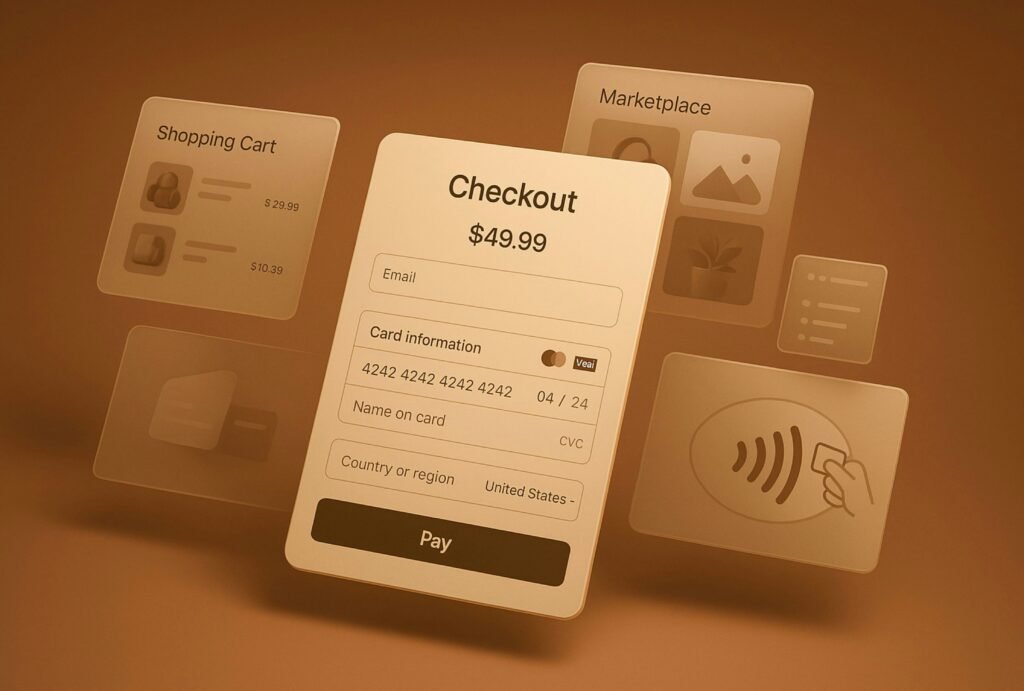
AI is changing how shoppers discover products and how businesses manage online stores. AI Tools for E Commerce are helping businesses create more conversational shopping experiences while making everyday store tasks easier.
Traditional ecommerce often starts with a customer typing keywords into a search box. AI-powered shopping experiences can instead let shoppers describe what they want in natural language.
OpenAI’s retail solutions, for example, describe conversational product discovery and shopping research experiences.
Google is also developing AI features across its shopping ecosystem, including tools for product imagery and merchant insights.
The larger shift is toward more conversational and personalized shopping. However, the fundamentals of ecommerce will not disappear. Accurate product information, useful images, fair pricing, reliable delivery, clear return policies, and good customer service will remain important.
AI Tools for E Commerce can improve the shopping process, but they cannot fix a poor product or a poor customer experience.
Conclusion
AI Tools for E Commerce can make many online-store tasks faster and easier. They can help merchants create product content, improve product images, support shoppers, analyze information, and build better product-discovery experiences.
The most effective approach is not to automate everything. Start with one clear problem, choose a tool that fits your platform, verify its output, protect customer data, and measure the results.
As AI-powered shopping continues to develop, ecommerce businesses should pay attention to both new technology and the fundamentals that customers already value: accurate information, useful products, clear communication, and reliable service.
Explore more AI guides on our website to find practical tools and strategies for building a smarter online business.
Visit Our Page – AI UNPACKED
Authoritative Outbound Resources
For readers who want to learn more, these official resources are useful:
- Shopify Sidekick
- Google Product Studio
- OpenAI for Retail
- Adobe Commerce AI
- Salesforce Commerce Einstein
- Google Merchant Center
- Canva
- Google Search Central
10 Frequently Asked Questions About Ecommerce AI
1. What are AI tools for ecommerce?
AI tools for ecommerce are software applications that use artificial intelligence to help with tasks such as product content, search, recommendations, marketing, customer support, and store management.
2. How can AI help an online store?
AI can help automate repetitive tasks, create content, improve product discovery, assist customer service, and support personalized shopping experiences.
3. Can AI write product descriptions?
Yes. AI writing tools can create product-description drafts from information provided by the merchant. The final description should always be checked against the actual product.
4. Can AI create ecommerce product images?
Yes. Some AI tools can generate or edit product images. Google’s Product Studio, for example, supports several AI-powered product-image editing and generation features.
5. Can AI improve ecommerce search?
Yes. Some ecommerce platforms use AI to understand the meaning behind a shopper’s search instead of relying only on exact keyword matches. Salesforce Commerce Einstein is one example.
6. Can AI recommend products to customers?
Yes. AI-powered recommendation systems can use available shopping data and other signals to provide product recommendations. The exact behavior depends on the platform and its configuration.
7. Is AI good for small ecommerce businesses?
Yes. Small businesses can use AI for practical tasks such as writing, design, product content, research, and marketing. The best starting point is usually a repetitive task that takes significant time.
8. Is AI-generated ecommerce content safe to publish?
It can be used, but it should be reviewed first. AI can make factual errors, so merchants should verify product information and comply with applicable platform requirements.
9. Does AI replace ecommerce employees?
AI can automate or assist with certain tasks, but ecommerce still requires human judgment, customer service, strategy, product decisions, and quality control.
10. What is the best AI tool for ecommerce?
There is no single best tool for every business. Shopify Sidekick may make sense for a Shopify merchant, while Google Product Studio may be useful for product imagery. Larger businesses may need broader platforms such as Adobe Commerce or Salesforce Commerce.